- By Admin
- 18 Dec, 2026
- Corporate
Inside the Shoe Manufacturing Process: From Design to Finished Footwear
Inside the Shoe Manufacturing Process
Shoe manufacturing is a detailed process that combines creative design, skilled craftsmanship, modern technology and strict quality control. A well-manufactured shoe must provide the right balance of comfort, durability, appearance and performance. From the first design sketch to the final packaged product, every stage plays an important role in determining the quality of the footwear.
At Heerastar, attention is given to every step of the manufacturing process to create footwear suitable for retail, wholesale and bulk business requirements.
Product Design and Development
The shoe manufacturing process begins with product design. Designers study current fashion trends, customer requirements, target markets and the intended use of the footwear. The style, shape, colour, material, sole design and comfort features are decided during this stage.
Technical drawings and sample patterns are then created. These patterns guide the production team during material cutting, stitching and assembly. A prototype or sample shoe may also be developed to evaluate its appearance, fitting, comfort and construction before bulk production begins.
Selection of Quality Materials
Material selection has a major impact on the strength, comfort and overall appearance of shoes. Different types of footwear require different materials depending on their purpose.
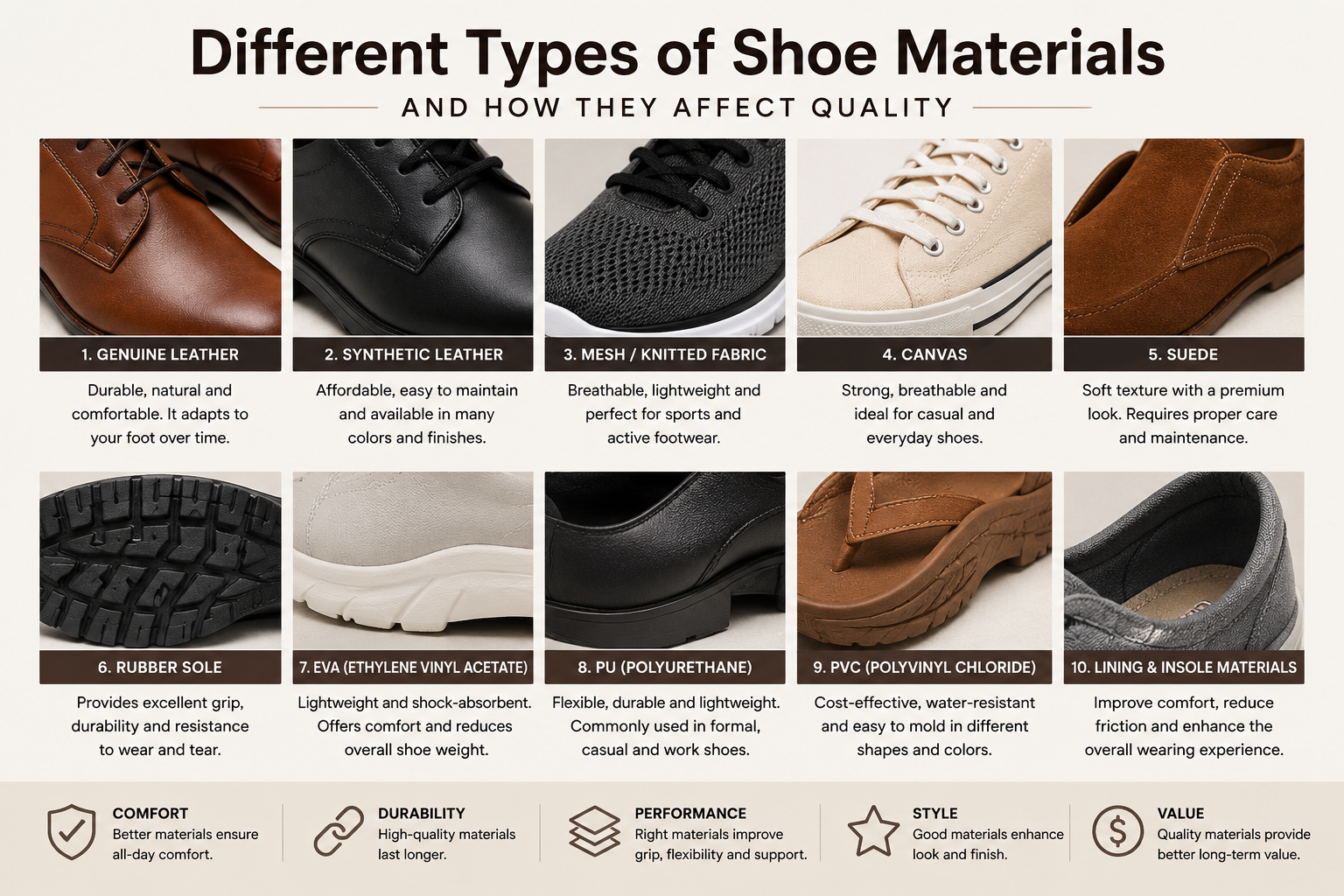
The upper portion may be made using genuine leather, synthetic leather, mesh, fabric, suede or other suitable materials. Inner linings, foam, insoles, laces, eyelets, adhesives and soles are also selected according to the product design.
For formal shoes, manufacturers may focus on smooth finishing and structured construction. Casual and sports shoes generally require flexibility, lightweight materials, cushioning and breathable components.
Cutting the Shoe Components
After the materials are approved, the shoe patterns are used to cut the required components. These parts may include the vamp, quarters, tongue, lining, collar, toe section and other upper components.
Cutting may be completed manually with specialised tools or by using advanced machines for improved speed and accuracy. Careful cutting helps reduce material waste and ensures that all parts have consistent shapes and dimensions.
Stitching and Upper Preparation
The individually cut components are stitched together to create the shoe upper. Skilled workers use industrial stitching machines to join the panels accurately.
Additional elements such as logos, decorative stitching, padding, eyelets and reinforcements may also be added during this stage. The completed upper is carefully inspected to confirm that the stitching is clean, strong and properly aligned.
Lasting and Shoe Shaping
Lasting is one of the most important stages of shoe manufacturing. A shoe last is a foot-shaped mould that determines the final shape, size and fitting of the footwear.
The stitched upper is pulled and fitted over the last. It is then secured carefully so that the material forms the required shape. Correct lasting helps create a comfortable fit and improves the overall appearance of the finished shoe.
Sole Preparation and Attachment
The outsole provides grip, durability and protection from the ground. Depending on the shoe type, soles may be made using rubber, EVA, PVC, PU, TPR or other materials.
The sole is prepared, cleaned and aligned with the shoe upper. Adhesive, stitching, moulding or a combination of these methods may be used to attach the sole. Proper sole bonding is essential because weak attachment can reduce product life and affect safety.
Finishing and Detailing
After assembly, the shoes move to the finishing stage. Excess material and adhesive are removed, edges are cleaned and the surface is polished or treated according to the design.
Insoles, laces, labels and branding elements are added. The shoes may also undergo brushing, colouring or surface finishing to create a professional and attractive appearance.
Quality Inspection
Quality control is carried out throughout the manufacturing process and again before packaging. Inspectors check the size, shape, stitching, sole bonding, finishing, colour consistency and overall construction.
The shoes may also be checked for comfort, flexibility and fitting. Products that do not meet the required standards are corrected or removed from the final batch.
Consistent quality inspection helps manufacturers deliver reliable footwear and maintain customer trust.
Packaging and Dispatch
Once the shoes pass the final inspection, they are cleaned, paired and packed in suitable boxes. Product information such as size, colour, model number and quantity is added to the packaging.
For wholesale and bulk orders, the boxes are organised into larger cartons and prepared for dispatch. Secure packaging protects the footwear during storage and transportation.
Why a Reliable Shoe Manufacturer Matters
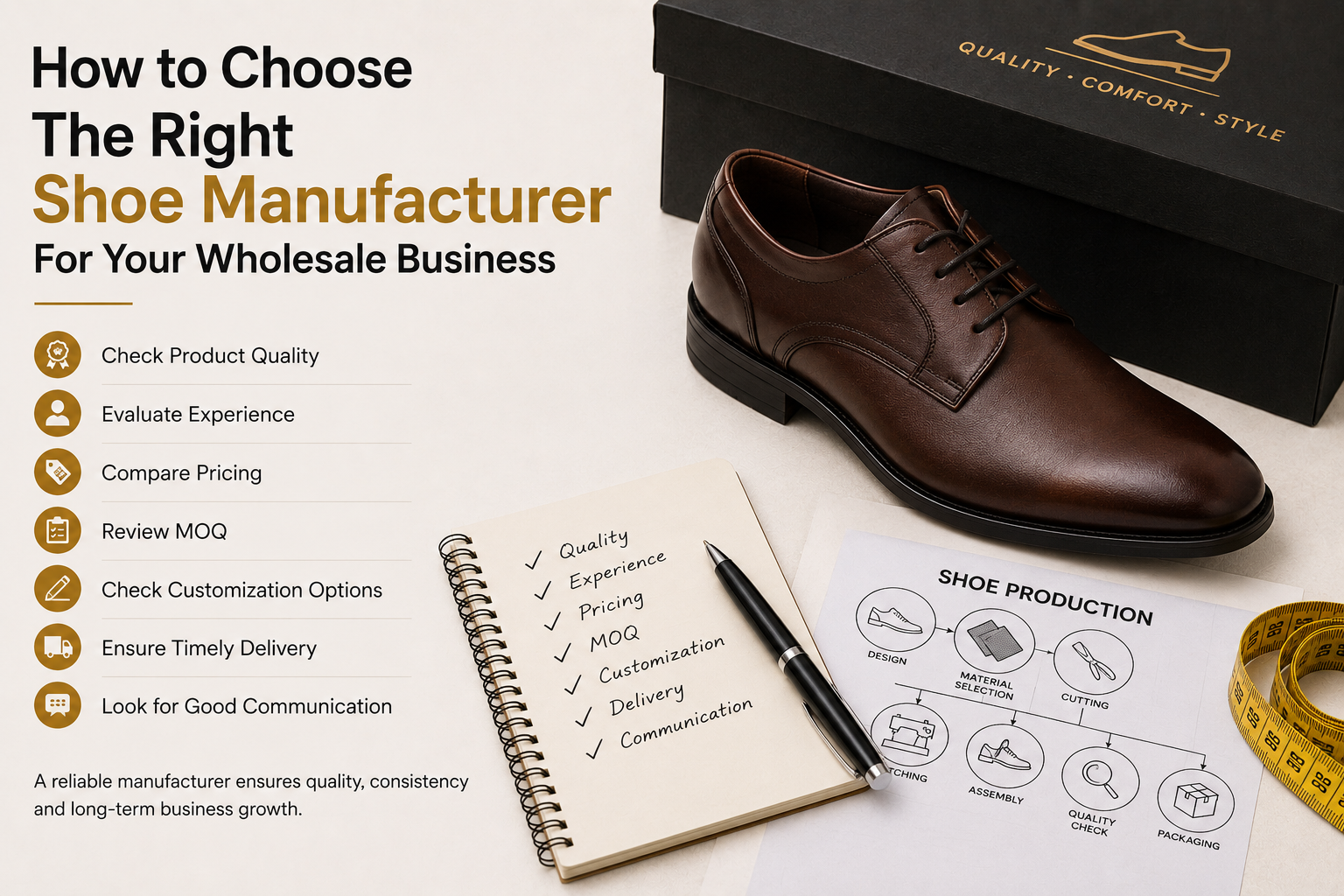
Choosing the right shoe manufacturer is important for retailers, distributors and private-label businesses. A dependable manufacturer can provide consistent product quality, proper size ranges, multiple design options and reliable bulk supply.
Heerastar focuses on delivering quality footwear with attention to material selection, comfort, construction and finishing. Our product range is suitable for businesses looking for dependable footwear supply and wholesale order solutions.
For product availability, bulk order quantity, sizes, colours and other manufacturing enquiries, businesses can contact the Heerastar team.